
How many books have you written? Which is your favourite?
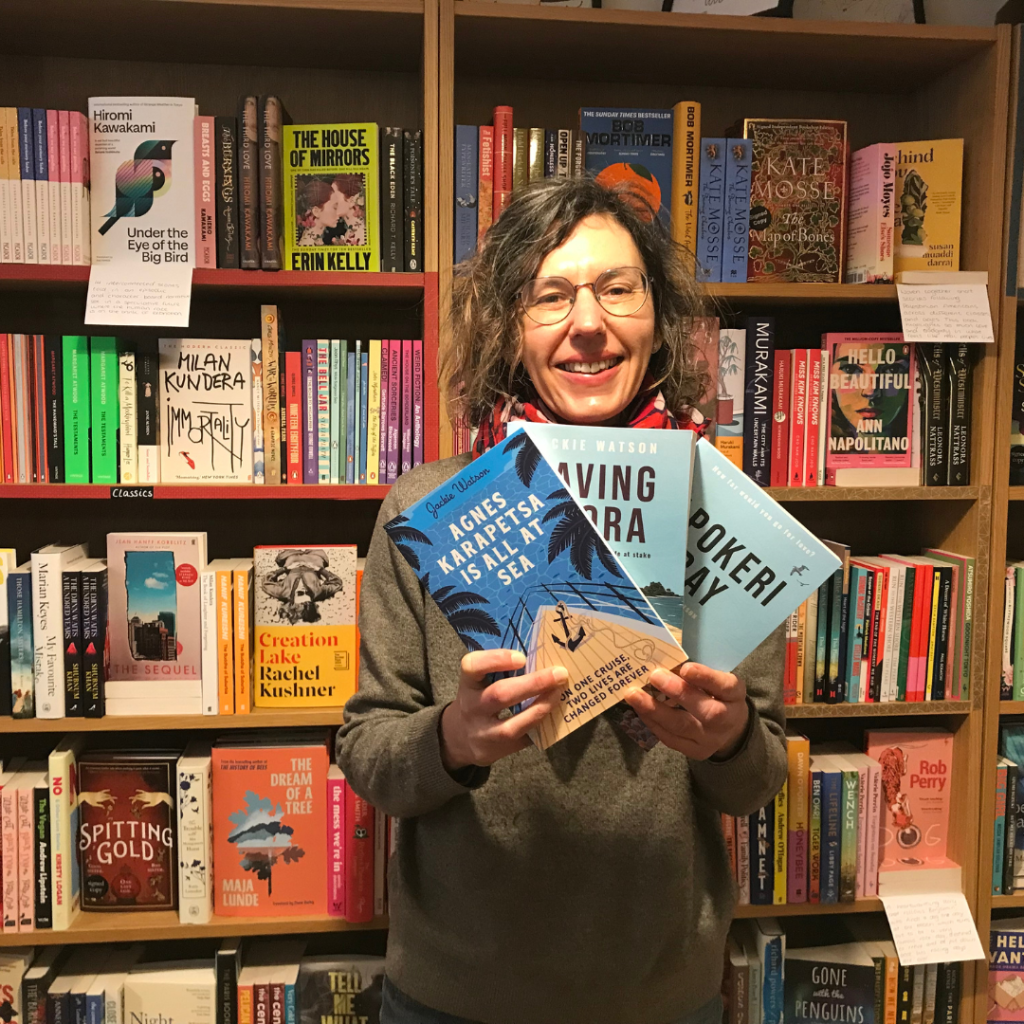
I’ve written and published three books since June 2023 and I’m in the final stages of editing my fourth for a summer 2025 release date.
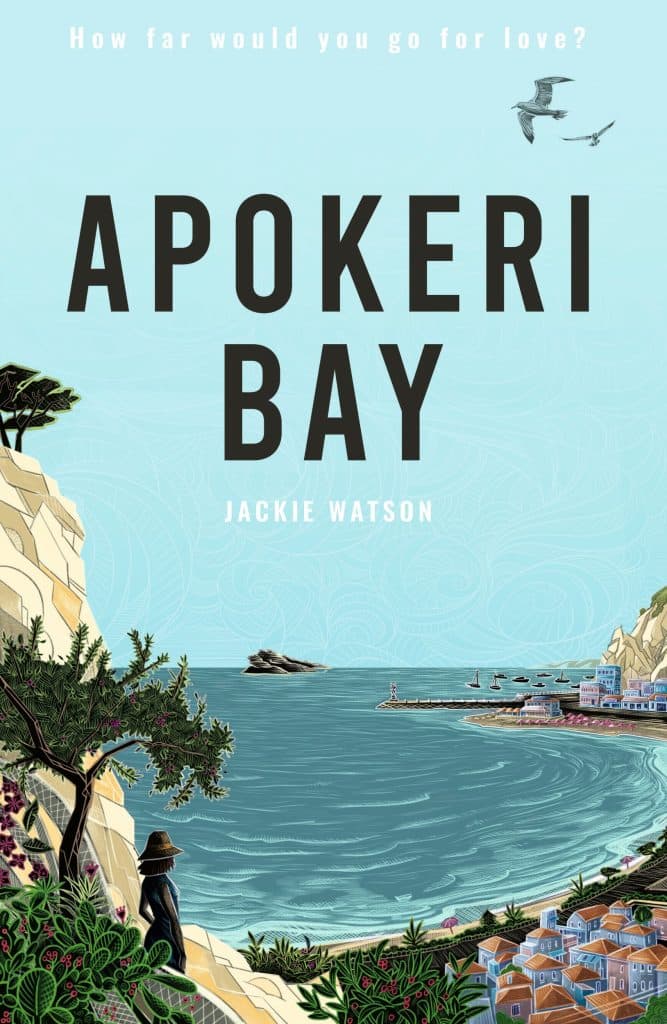
Two of my published books are Greek-based contemporary fiction novels, mainly set on the beautiful island of Lefkada. Apokeri Bay and Saving Elora are part of the Apokeri Bay trilogy which charts the story of a feisty young British woman called Anna who falls in love with a quaint Greek fishing village full of secrets and ends up with some of her own. The trilogy spans twenty years and is full of hope, heartbreak, sacrifice, second chances, friendship, betrayal, revenge, redemption, family obligations and love. Above all, the trilogy is a great story about the unintended consequences of our actions. Even if they’re done for the best of intentions.
My third book is a novella called Agnes Karapetsa is All at Sea and is set on a Mediterranean cruise ship. This story centres around highly ambitious Agnes who works in the kitchen and one of the passengers. Eager to please Tony is on his stag do and must complete a list of dubious stag do challenges. One prank was all it took to set Agnes and Tony on a collision course. And when the Mediterranean cruise liner finally docks, neither will be left unscathed.
If you want to escape to beautiful sunny locations with a gripping page-turner then grab your copy now. All my books are available on Amazon in paperback and Kindle. They can also be requested from bookshops and in libraries. What more could you ask for.
And when it comes to my favourite. Well, that’s like asking a parent who their favourite child is. I love them all.
How do you develop your plot and characters?
There is plenty of software available to help writers develop their plots and characters. But this particular author prefers good old-fashioned Microsoft Excel to create multiple spreadsheets. I also use plenty of notepads to scribble in when ideas pop into my head.
When it comes to my spreadsheets I usually stick with two main ones. There is an overarching plotline where I run the timeline along the horizontal and the main characters down the vertical. I then start to drop key scenes into the appropriate cells. This quickly allows me to see where I need to create additional scenes to link the narrative together. It also lets me see if the timeline works. In my second novel, Saving Elora had various storylines that had to come together at a particular time. There was quite a bit of arrangement and rearrangement required to make sure everything worked!
In the second spreadsheet I break down the story down chapter by chapter. The chapters are listed down the vertical and then along the horizontal I run various headings: characters, character story, character arc, POV (point of view), location, time, plot reason, plotline, senses, conflict, cliffhanger and stakes. I drop in my ideas to end up with a rough framework and then I set off writing the first draft. At this stage it’s more important to get the words on the page. You can then refine the story when you come to editing and re-editing – because there’s a lot of that.
I also have a spreadsheet which details each character’s physical appearance, habits, personality, date of birth, occupation and family connections. This is especially important for me as my trilogy spans twenty years and at the very least I need to make sure they age correctly. And I even sketched out the village of Apokeri with the location of characters homes and businesses. What can I say, I’m a detail nerd.
What inspired the idea for your book?
If you’d have asked me six years ago if I’d ever write a book, the answer would have been an unequivocal no. Not a chance. No way. I love reading but didn’t believe I’d ever have a good enough idea to fill a whole novel.
But then, in August 2020, I started to have a recurring dream. For months and months, it was always the same. A young British woman was trekking down a Greek mountainside with two friends to arrive, parched with thirst, at a bike shop. Night after night, the same dream but then it started to develop as more characters made their appearance. And then I started to daydream more and more about this British woman on holiday and imagine what would happen if she never went home? The characters and locations were so vivid that there is no other way to put it – I was compelled to write Apokeri Bay and set the story free.
As the dream was set on a Greek island, the novel had to be. And once I started writing I couldn’t stop. Initially, there was only ever going to be one novel but with a tidal wave of ideas the Apokeri Bay Trilogy was born. And with the ideas still flowing, I now have the Apokeri Bay series.
If you’re planning a sequel, can you share a tiny bit about your plans for it?
I’m so glad you asked that. The final part of the Apokeri Bay Trilogy will be released this summer and picks up ten years after the events in Saving Elora.
Head-strong Anna is content with her Greek island life. She’s overcome plenty of adversity and is now settled in Apokeri. However, she’s still hiding a double lie and with the arrival of former Apokeri residents, hell bent on revenge, Anna will see her family’s world blown apart.
Meanwhile, out in Apokeri Bay sits Tharesseti which is often referred to as the cursed island due to its turbulent and bloody past, and a lost treasure. In the final part of the Apokeri Bay trilogy the hunt is on to unearth the missing fortune and the truth about Tharesseti’s infamous 18th-century philandering owner is finally revealed.
I’m so excited to share the concluding instalment with everyone. I loved writing this story with its cast of familiar faces and also a few new ones. Like the other part in the trilogy, it’ll be available from Amazon in paperback and on Kindle, as well as bookshops and libraries. I hope you enjoy it.
If you were to write a spin-off about a side character, which would you pick?
It’s funny you should say that because I already have!
For those of you who’ve enjoyed Apokeri Bay, you may recall the prickly Aphrodite Café chef who gives Anna a hard time. Agnes also makes a few cameo appearances in Saving Elora and one scene perfectly captures her no-nonsense personality and was incredible fun to write.
Agnes Karapetsa is All at Sea is set twelve years before Apokeri Bay and the story was supposed to be short and sweet. Ten thousand words at most. But once I started writing our young, ambitious galley chef had other ideas. In the end, the spin off (inspired by a deleted Apokeri Bay chapter) ended up being a novella and I’m extremely happy I invested the extra time to bring twenty-four-year-old Agnes to life.
In all my stories I include the good and the bad sides of human behaviour. I want to push my characters out of their comfort zone. I want to force them to face the consequences of their actions. In that respect Agnes Karapetsa is All at Sea is no different from Apokeri Bay and Saving Elora. But then again it is. For a start it isn’t based on Lefkada (although the Greek island of Corfu does make an appearance) and there’s a touch more romance in this story. However, because this is me, the romance certainly isn’t squeaky clean and honest. It’s slightly darker shall we say.
I hope I don’t put you off going on a cruise after reading the antics both passengers and crew on this luxury Mediterranean cruise. Or perhaps I might encourage you to book one.
How do you come up with character names for your stories?
I create my character names for my stories in various ways. One is through research. I’ll pull together lists of first names and surnames depending on the nationality of my characters and do a mash-up. I then check to see if anyone famous or infamous has that name. I don’t want to find that I’ve accidentally given a character the name of a notorious murderer! I also use either first names or surnames of people I know or I’ve met. In Agnes Karapetsa is All at Sea one of the characters first names is someone I work with. In Apokeri Bay and Saving Elora, the surname of a minor character is the birth name of two of my closest friends. And in the final part of the Apokeri Bay trilogy, I named a character after a fantastic woman who runs a mobile Greek bakery business. So, you never know, maybe you might inspire an author to use your name in one of their stories.
How important was professional editing to your book’s development?
I cannot stress how important professional editing is to your book’s development. A good editor is worth their weight in gold and mine (the fabulous Manda Waller) certainly is.
It doesn’t matter how many times you reread and self-edit your story, mistakes will be missed. And even if you’re a professional editor, it still pays to have someone else go over your work. It’s so easy to read what you want to read and not what’s actually on the page. As an author, you’ve lived and breathed your story so it’s incredibly difficult to be objective about your own work.
A professional editor will provide an independent assessment and it should always be in a constructive manner. They are not there to bash your work but will make suggestions and recommendations to improve your text.
What would you say to an author who wanted to design their own cover?
Don’t judge a book by its cover is a well-known saying but when it comes to books that’s exactly what most of us do. The cover captures our interest. The book description hooks us. And the first few pages lock us in. Book reviews and recommendations play a big part but they aren’t enough.
If you’re going to design your own cover you had better know what you’re doing. There are many authors who are extremely talented designers with a creative flair, who understand that book covers for particular genres follow certain principles. If you’re one of those authors that’s brilliant. I’m definitely not one of those, so I went to the professionals.
All of my covers are by Wigwam Studios, a friendly global creative company. I’ve had so much positive feedback about their designs from readers and bookshops. How great is that.
What is the most valuable piece of advice you’ve been given about writing?
I’ve had tonnes of brilliant advice about writing but I’d say the most valuable piece is simple – keep writing.
If you want to be an expert you have to keep working at your craft. Making the time to write. Its challenging but the rewards are fantastic. I was so excited when Saving Elora was chosen in The Wishing Shelf Book Awards as an Adult Fiction Finalist.
Writing is my passion. It feeds my soul and from readers comments it brings them so much joy. I want to be the best possible writer I can be so I will keep learning and I will keep writing for the enjoyment of myself and others.
What do you think makes a great story?
A great story has to flow seamlessly. It has to draw you into the world the author has created and keep you there. The characters have to be engaging, entertaining and believable. A great story must have an emotional connection. Can it reduce you to a blubbering wreck with tears and snot running down your face? Can it make you laugh out loud? Can it make you so angry that you shout at a character for their actions? A great story has to make you want to keep reading even if you have a million things to do or it’s well past your bedtime. Just one more page and then I’ll turn off the light. How many times have you done that?
A great story stays with you and you’ll return to it over and over again. A great story makes you want to read everything that author has written. That’s what I aim to do with my stories – make you hungry for more.
Get in touch with me the following ways:
Facebook: https://www.facebook.com/jackiewatsonwrites/
Instagram: https://www.instagram.com/jackiewatsonwrites/
X: Jackie Watson (@JackiewWrites) / X
TikTok: https://www.tiktok.com/@jackiewatsonwrites
Website: https://www.jackiewatsonwrites.com
Amazon links: Amazon.co.uk: Jackie Watson: books, biography, latest update
Goodreads: Jackie Watson (Author of Apokeri Bay) | Goodreads