
What kind of books do you write?
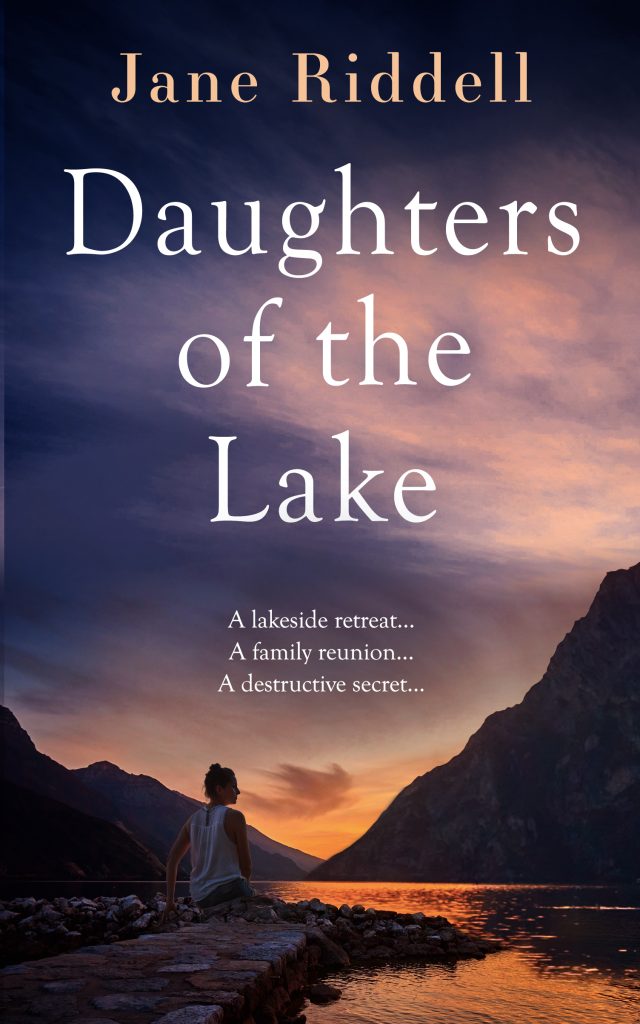
I’ve self-published three contemporary novels, which could be described as women’s fiction/literary fiction. My debut was Daughters of the Lake, about a disastrous family reunion in Switzerland. I followed this with Chergui’s Child, the story of a mother’s search for her missing child. The third one was Things We Choose to Hide, featuring a woman who hastily marries an Italian with secrets. I’ve also published a short guide to editing fiction: Words’Worth: a fiction writer’s guide to serious editing, based on my own editing process.
As JR Lili, I’ve published a comic novel, The Haven for Quirky Conditions, and a novella about a Russian cat who comes to Edinburgh to learn about creative writing, The Bakhtin Chronicles: one cat’s experience of academia.
What, to you, are the most important elements of good writing?
An imaginable yet plausible plot (depending on genre); strong characters who are neither total angels or total villains. Edgy dialogue. Correct grammar and spelling; easily understood sentences; strong verbs, avoiding adverbs as much as possible. Using a mixture of long and short sentences for good rhythm. Using the senses.
What are common traps for new authors?
The list is endless! Telling not showing. Over-explaining what is happening which can irritate readers, or inadequate explaining, which can cause confusion. Using what’s known in the trade as “on-the-nose” dialogue rather than using subtext which causes tension. Including too much description thereby overwhelming the story, or not giving enough so that readers find it difficult to visualise the location/background. Using too many adjectives and adverbs: overwriting. Changing point of view unintentionally. Using clichéd expressions, overusing metaphors and similes.
What do you think is the best way to improve your writing skills?
I’ve found that reading technical books on writing is useful, especially when examples are given. This was particularly helpful when I went through a period of writer’s block. Studying these books helped keep my connection to writing until I had the enthusiasm to resume working on my novel. Reading books and analysing them for their writing style: what works, what doesn’t, is also a great way to learn more about the craft of writing.
Finding people who’ll give you constructive feedback on your writing can be invaluable. But you need to choose someone who’s likely to appreciate the genre you’re writing in, and someone with good communication skills. Being too direct with negative comments can reduce the writer to rubble. And failing to point out the strengths of the writing can result in the writer feeling their work isn’t good in any way.
Attitude plays a part, too, accepting writing as an art which you can constantly improve. I’ve heard that if actors go on stage without feeling nervous, they won’t perform so well, and I know a comedian who admits to being almost physically sick before a performance. There’s no room for complacency, whatever the art.
How long have you been writing or when did you start?
I wrote my first story as a ten-year-old: The Missing Piece of Paper (not the most intriguing of titles), in the style of Sherlock Holmes. After that I dabbled in writing articles until in my mid-thirties I wrote a Mills and Boon book, which was rejected. For a long time, I wrote intermittently until we moved to France in 2006 for three years.
When did you first realize you wanted to be a writer?
I remember this well. We were about to move to France, where I wouldn’t be able to work due to my ropey French. About a month before we left, I was at the gym in Edinburgh on a wet Saturday afternoon,walking on the treadmill, listening to Martha Reeves and the Vandellas singing Dancing in the Street. At this point, I decided to give writing a go and felt real excitement at the prospect.
When did you first call yourself a writer?
During our years in France, I wrote copiously finishing one novel and writing the first draft of another. I also put together a basic guide to learning French. At this time, I was constantly meeting new people and being asked what I did. However, it was only about half-way through our three-year stay, began saying I was a writer. Nevertheless, imposter syndrome kicked in and it took a while for me not to think: ‘Who are you trying to kid?’ Back in the UK again, I extended the career break I’d taken from my health promotion job and studied for a Masters in Creative Writing. After that gruelling experience, I continued writing, including working with a mentor for a year, which was extremely beneficial.
Have pets ever got in the way of your writing?
Never! On the contrary, pets have inspired my writing. For over a decade I’ve been pet sitting animals in Europe, including dogs, cats, ferrets, parrots, guinea pigs and terrapins. This has resulted in two novellas about a cat that wants to learn creative writing, and then decides to set up an international finishing school for animals that feel their education was inadequate. I’ve been able to incorporate incidents that happened during my pet sits, changing the animals’ names, of course, to protect their identity!
Whom do you trust for objective and constructive criticism of your work?
American author, Carrie Lahain, who analyses my story in forensic detail. She marks what she likes, where she’s confused and where there are continuity issues. I love receiving her feedback with its constructive suggestions, her positivity boosting my energy.
Do you prefer ebooks, printed books, or audiobooks most of the time?
Ebooks are my preference. They are cheaper, lighter to carry around and save storage space, and there’s a choice of font style and size. Additionally, you have a choice of what to read in one ereader. However, there’s something about the visual pleasure of walking into a bookshop and seeing all those beautiful covers and I understand people who enjoy holding a book in their hands. The last time I read a real book, I found myself trying to swipe to the next page.
Follow Jane on:
Amazon: https://www.amazon.co.uk/stores/author/B00B9E4ABQ
Bluesky:https://bsky.app/profile/janeriddell.bsky.social
Facebook: https://www.facebook.com/jane.riddell.90/
Website: janeriddellquietfiction.wordpress.com